


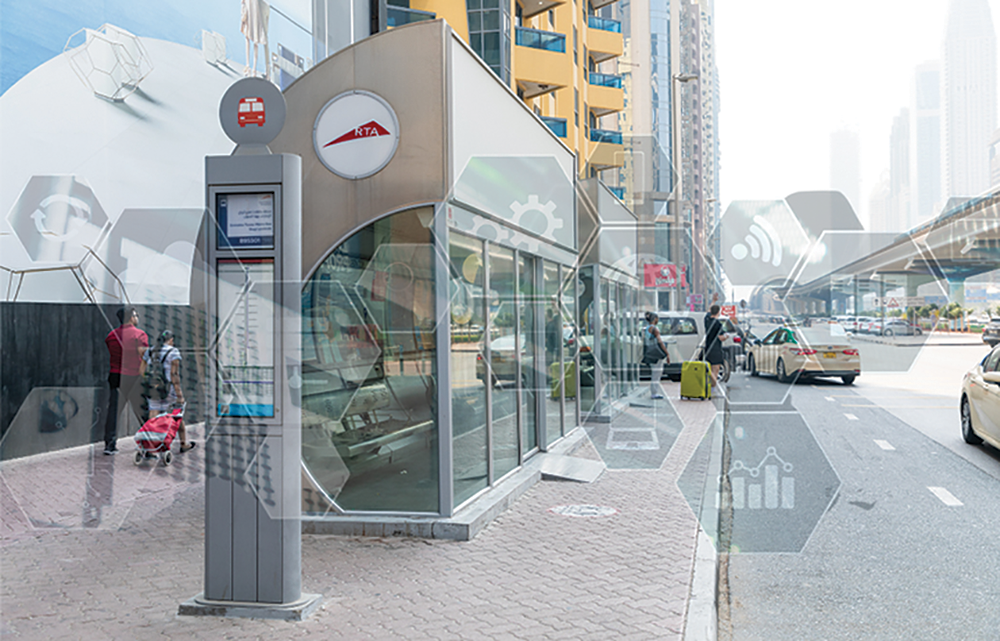
With the advent of social phenomena, such as urbanisation and population growth and their continued pressure exertion on public infrastructure, the need and intrinsic desire for innovative solutions has never been more essential. One such solution that has emerged not only as a game-changer, but possibly the only viable solution in both efficiency and longevity, is Radio Frequency Identification (RFID) technology.
This technology, which enables automatic identification and tracking of objects can play a pivotal role in enhancing the efficiency and resilience of public infrastructure.
Feasible applications in urban environments
One of the current and most successful uses of RFID in public infrastructure is in transportation systems; RFID tags are embedded in public transit cards, allowing for seamless and contactless fare collection, record keeping of passenger information (which can mitigate fraud and other crimes), and creating a cashless transactional environment. This not only speeds up the boarding process for commuters, but also reduces the need for physical cash handling, thereby decreasing the risk of theft and loss. Furthermore, RFID technology can enhance services such as traffic management by tracking vehicle movement and optimising traffic light sequence accuracy, thus reducing congestion and vehicle accidents.
Additionally, in transportation, RFID is used in waste management systems, where tags are attached to waste bins to not only monitor collection schedules, but bin usage as well. The information collected can help municipalities optimise borough services, such as collection routes, which can decrease operational costs, leading to more efficient waste management practices and processes.
RFID use-cases in public infrastructure
• RFID technology can dramatically improve public transportation systems. Buses and trains equipped with RFID readers can be automatically tracked, allowing for real-time updates on arrival and departure times. This information can be relayed to passengers through mobile applications or digital displays at stations, enhancing the user experience and encouraging public transport use.
• Public agencies often have the enormous task of managing extensive inventories of assets such as vehicles, equipment, furniture and other facilities. The use of RFID tags can simplify and strengthen asset tracking, ensuring that items are accounted for and maintained properly. This reduces losses, equipment abuses and enhances the overall operational efficiency of asset management in public services.
• The technology can also be used in what is dubbed ‘Smart Waste Management’, where it can optimise waste collection services through smart bins embedded with RFID tags. The bins indicate when they are at full capacity, enabling waste management services to optimise collection routes and schedules, reducing the environmental impact and costs.
• Utilities Services such as electricity, water and in some cases, gas, can leverage RFID technology for meter reading and monitoring.
RFID-equipped meters can transmit data wirelessly, providing real-time consumption data and enabling better billing accuracy, demand management and service delivery.
• RFID can also dramatically improve public transportation systems. Buses, trains and where applicable, minibus taxis equipped with RFID readers can be automatically tracked, allowing for real-time updates on arrival and departure times, and sometimes delays, if any. This information can be relayed to passengers through mobile apps, and intra-transit and station digital displays, enhancing the overall user experience and encouraging public transport use.
• In Construction, RFID can be used to track building materials and equipment on job sites. This ensures that resources are efficiently utilised and reduces delays caused by misplaced or unavailable materials. Additionally, RFID can assist in scheduling routine maintenance for public infrastructure, extending the lifespan of assets and facilities.
As public agencies navigate the innate complexities of modernisation and urbanisation, embracing RFID solutions will be critical in delivering effective services to citizens. RFID technology holds significant undertaking for strengthening public infrastructure through enhancing efficiency, accuracy, and sustainability. By pre-emptively addressing the challenges of implementation by partnering with efficient service providers to leverage future trends, RFID can transform public infrastructure into a more efficient, resilient and responsive ecosystem, ultimately improving the quality of life for communities.
The top 5 future trends of RFID in public infrastructure
IoT systems integration: The Internet of Things (IoT) is set to enhance RFID applications by integrating RFID systems with other smart devices and systems. This will enable more comprehensive data collection and analysis, empowering a way forward.
Advanced analytics: The integration of RFID data with advanced analytics will provide deeper insights into asset utilisation, service delivery, and infrastructure health, aiding in proactive decision-making and futureproofing.
Collaboration and partnerships: Public agencies and other private stakeholders may increasingly seek to collaborate with technology providers and systems integrators to leverage RFID innovations and best practices, to ensure successful implementation.
Climate impact reduction: RFID technology is more than likely to play a crucial role in building resilient infrastructure that can adapt to changing environmental conditions and minimise their effects.
Expanded applications: As awareness of RFID technology and its necessity grows, more public agencies will explore its potential applications beyond transportation and utilities, including urban planning and emergency and services management.
| Tel: | 087 093 2700 |
| Email: | [email protected] |
| www: | www.osiris.co.za |
| Articles: | More information and articles about Osiris Technical Systems |






© Technews Publishing (Pty) Ltd | All Rights Reserved
 printer friendly version